Costco Sells Groceries Near Cost. It Earns on Members Who Renew.
Costco earns on the fee members pay to shop there. Watch whether paid members keep growing and the renewal rate stays steady.
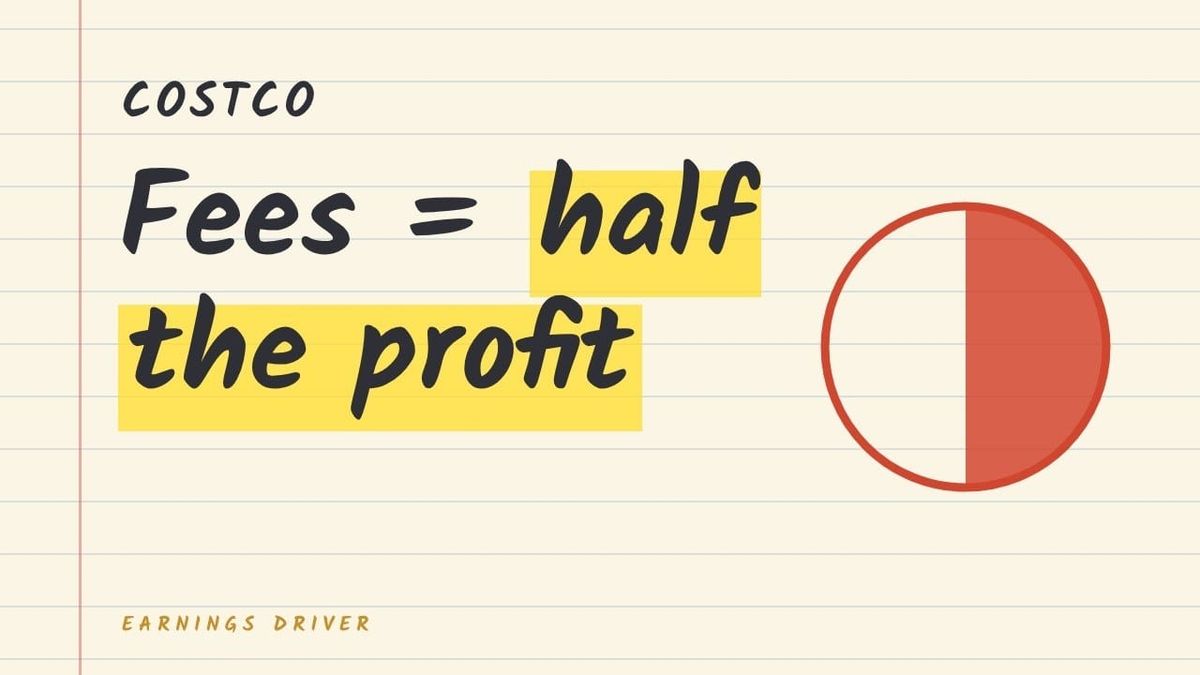
In one line: Costco earns on the fee members pay to shop there. Watch whether paid members keep growing and the renewal rate stays steady.
At a glance
- Latest: paid members 84.1 million at the end of FY2026 (August 2026), up 3.8% from a year earlier; renewal rate 92.3% in the US and Canada, unchanged from a year earlier
- Biggest risk: members losing trust in the value, and renewals falling, if fees or prices rise too fast
- Reports: Quarterly, with sales reported monthly; the fiscal year ends on the Sunday nearest the end of August. Next results: see Earnings Dates.
On September 24, 2026, Costco reported net sales of $297.2 billion for its fiscal year ended August 30, 2026, up 10.1%. Net sales in the 16-week fourth quarter were $93.9 billion, up 11.2%. Busier warehouses and higher gas prices explain much of the growth in net sales. Neither explains where the profit comes from. Costco made $11.7 billion in operating income in FY2026 (September 2025–August 2026), and $5.9 billion of it, about half, was membership fees. The goods, more than $290 billion of them, earned the other half.
What it sells vs. what it earns on
Costco sells groceries, household goods, gasoline and a rotating mix of other goods from warehouses in 14 countries. Food and household staples made up 55% of net sales in FY2025 (September 2024–August 2025).
Table 1 — Costco's net sales by category, FY2025
| Category | Share of net sales |
|---|---|
| Packaged food and household staples | 41% |
| Fresh food | 14% |
| Non-food goods, from appliances to tires | 26% |
| Gas, pharmacy, food court, online sales and other businesses | 19% |
Most of Costco's warehouses, and most of its revenue, are in the US and Canada.
Table 2 — Costco by region
| Region | Warehouses, end of FY2026 | Share of FY2025 revenue |
|---|---|---|
| US and Puerto Rico | 647 | 73% |
| Canada | 115 | 13% |
| 12 other countries | 177 | 14% |
Costco keeps its markup low on purpose. It is widely reported to cap markups at 14% over cost on national brands and 15% on its own Kirkland Signature label. A 14% markup over cost is about 12% of the selling price. Gasoline generally carries a lower gross margin than the rest of the business. Costco's gross margin on all the goods it sells, gasoline included, was about 11% of net sales in Q4 FY2026 (May–August 2026). Costco's selling, general and administrative expenses, from warehouse staff to head office, took about 9% of net sales. The goods therefore earned about 2% of net sales before membership fees.
What Costco earns on is the right to shop there. Membership costs $65 a year in the US (C$65, about US$46, in Canada). The US Executive tier costs $130 and pays a 2% reward on purchases, capped at $1,250 a year. Costco subtracts the reward from net sales, not from membership fees. Providing a membership costs Costco little next to the fee, so most of it is profit.
Members pay the fee once a year, in advance, instead of paying a higher markup on each basket. Members renew because they believe the goods are good value.
Costco says Kirkland Signature lets it sell at prices generally below national brands. A warehouse carries fewer than 4,000 items, so Costco buys each item in large volume. That volume lets Costco negotiate lower prices from suppliers.
What moves the profit
Operating income ≈ (average membership fee × paid members) + (paid members × trips per member × average ticket × gross margin) − selling, general and administrative expenses
- Paid members. New warehouses add them and renewals keep them.
- Renewal rate. The share of members who pay again.
- Average membership fee. An Executive member pays $130 instead of $65. For a member who spends more than $3,250 a year, the 2% reward returns more than the extra $65. The reward also gives the member a reason to do more of their shopping at Costco. The last fee increase, in September 2024, raised the basic fee from $60 to $65, seven years after the one before.
- Trips per member and average ticket. Much of a warehouse's cost, such as the building and its equipment, is the same whether it is busy or quiet. More trips and bigger baskets spread that cost further. Cheap gas is one more reason to make the trip.
- Kirkland Signature share. Not in the filings. On December 12, 2024, Ron Vachris, the chief executive, said Costco's private-label share of US sales was "almost 33%."
Reading the earnings: what to watch, and how
Costco's monthly sales reports, results releases and earnings calls are all at investor.costco.com.
- Monthly comparable sales, excluding gas and currency. Read it: gas prices swing reported sales without saying much about members, so read the comparable figure that excludes gasoline and exchange rates. A slowdown that lasts several months and is larger than any fall in grocery inflation means members are buying less. Latest: comparable sales excluding gas and currency rose 7.6% in the five weeks to October 4, 2026, against 6.7% in Q4 FY2026 (May–August 2026). A later Labor Day added about 0.5 percentage point.
- Membership fee income, against the last fee increase. Read it: for about two years after a fee increase, fee income rises even if nothing else changes. After that, growth has to come from more members and more Executive upgrades. Latest: $1.85 billion in Q4 FY2026, up 7.3% from a year earlier, or 6.8% excluding the fee increase and currency. On the September 24, 2026 call, Costco said Q4 was the last quarter with a year-over-year benefit from the 2024 increase.
- Paid members and renewal rate. Read it: paid-member growth shows whether new warehouses and new countries keep adding members. A dip of a point or two in the US-and-Canada renewal rate is an early warning that members' trust in the value is weakening. Latest: paid members rose 3.8% to 84.1 million at the end of FY2026, and Executive members rose 9.4% to 42.3 million. The renewal rate was 92.3% in the US and Canada and 89.8% worldwide at the end of August 2026, both unchanged from a year earlier.
- Gross margin, and why it moved. Read it: a rising margin while sales slow would be a warning, because it may mean Costco is keeping more of each sale instead of lowering prices for members. Gas prices and one-time items also move the margin, so read management's explanation. Latest: 11.02% in Q4 FY2026, against 11.13% a year earlier, and up 0.2 point excluding higher gas prices. Refunds of import tariffs Costco had paid added about 0.1 point, and a LIFO charge (an accounting charge for rising inventory costs) lowered it by about 0.1 point.
- New warehouses and capital spending. Read it: new warehouses, especially in new markets, bring in many of the new members. They cost money up front and take a few years to reach full volume. Latest: 939 warehouses at the end of FY2026. Costco plans 33 openings in FY2027 (September 2026–August 2027), five of them relocations, and about $7.5 billion of capital spending, up from $6.4 billion in FY2026.
Leading indicators (outside Costco's filings)
- Gasoline prices. Weekly pump prices show whether gas prices will raise or lower reported sales and the gross margin. (price)
- When: weekly. Where: the US Energy Information Administration's retail gasoline price series.
- Latest: $4.35 a gallon in the week of October 5, 2026, up from about $3.12 a year earlier.
- Grocery inflation. Rising food prices raise the average ticket. They can also make members question whether the goods are still good value. (price, demand)
- When: monthly. Where: the US consumer price index for food at home (Bureau of Labor Statistics).
- Latest: food-at-home prices rose 2.2% in the 12 months to August 2026.
- Sam's Club results. Walmart's membership warehouse competes for the same shoppers. If Sam's Club's comparable sales and membership and other income grow faster than Costco's, Costco may be losing shoppers to Sam's Club. (competition)
- When: quarterly, with Walmart's results. Where: Walmart's earnings release, Sam's Club segment.
- Latest: in the 13 weeks to July 31, 2026, Sam's Club US comparable sales excluding fuel rose 4.4%, and membership and other income rose 6.0%. Costco's US comparable sales excluding gas and currency rose 7.2% in the 16 weeks to August 30, 2026.
What analysts are asking
Across Costco's last four earnings calls, from December 2025 to September 2026, analysts kept returning to a few questions.
- "What will reverse eight quarters of slowing paid-member growth?" In September, Gary Millerchip, the chief financial officer, said the growth rate of recent quarters "is probably more typical of what we'd expect to see." In May he gave one reason for the slowdown: "We haven't seen a major new opening in a new international market for a while."
- "Will members who sign up online lower the renewal rate?" In December, Millerchip said members who sign up online "renew at a slightly lower rate." He said "the next couple of quarters could still show a slight decline." In September he said a rising share of Executive members, who renew at a higher rate than basic members, should raise the renewal rate.
- "Do new warehouses still add members?" Infill locations are new warehouses in markets Costco already serves. In December, Ron Vachris, the chief executive, said several of them "don't result in a whole lot of sign-ups, but really drive a lot of top-line sales." In September, Millerchip said that in many cases warehouses in Asia have "a much higher number of members per warehouse, but they often visit less frequently." He said a warehouse in Asia and one in the US reach a "similar strong economic outcome."
- "Is comparable sales growth slowing, and how much of it is inflation rather than more trips and more items per basket?" In September, Millerchip said comparable sales excluding gas and currency had stayed "in that sort of 6% to 7% range." He said inflation "currently is running in the low single digits." In May he said members were buying "an increased number of items in the basket."
- "How much of the tariff refunds go into lower prices rather than the gross margin?" The refunds return import tariffs Costco paid under the International Emergency Economic Powers Act. In September, Millerchip said Costco received $184 million of refunds, including interest, in Q4 FY2026 (May–August 2026), and expects more in FY2027 (September 2026–August 2027). He said Costco plans to keep "reinvesting the majority of the dollars we receive in increased member values."
A note on valuation
On September 25, 2026, Costco's share price of about $923 was roughly 44 times its earnings per share for FY2026 (September 2025–August 2026). At the end of FY2021 to FY2025, the same multiple ranged from about 38 to 54 times. FY2026 earnings per share included a one-time benefit of $0.15 from refunds of import tariffs.
The bottom line
Membership fees bring in about half of Costco's operating income, while the goods earn little. Members keep renewing, but paid-member growth has slowed. Whether new warehouses and Executive upgrades can keep fee income growing is not yet known.
Wondering how Costco's model compares with Walmart's? The book sets the two side by side: Earnings Driver.
Sources: Costco Q4 and fiscal 2026 results (16 weeks and 52 weeks ended August 30, 2026), September 24, 2026; Costco earnings calls of December 12, 2024, December 11, 2025, and March 5, May 28 and September 24, 2026; Costco Form 10-K for fiscal 2025; Costco September 2026 sales report, October 7, 2026; Costco membership fee announcement, July 2024; leading indicators: EIA weekly retail gasoline prices (October 6, 2026), BLS consumer price index (September 11, 2026), Walmart Q2 FY2027 results (August 20, 2026); valuation from share price and reported EPS as of September 25, 2026, with past fiscal-year-end share prices from FullRatio and StockAnalysis. At investor.costco.com unless noted.
For sources that work for any company — filings, earnings calendars, consensus estimates — see Where to find the numbers.
Educational only, not investment advice. Figures as of the periods noted.